Forklift ownership guide
How to Calculate Forklift Asset Depreciation
Purchasing a forklift is a significant investment, but understanding its long-term value is equally important.
Whether you are upgrading your fleet, selling surplus equipment, or evaluating assets for financial reporting, knowing how to calculate forklift depreciation helps your business make more informed decisions.
Unlike many fixed assets, forklifts experience different rates of depreciation depending on how they are used, maintained, and operated. A well-maintained machine with moderate usage can retain substantial value, while a neglected forklift may lose resale potential much faster than expected.
Quick answer
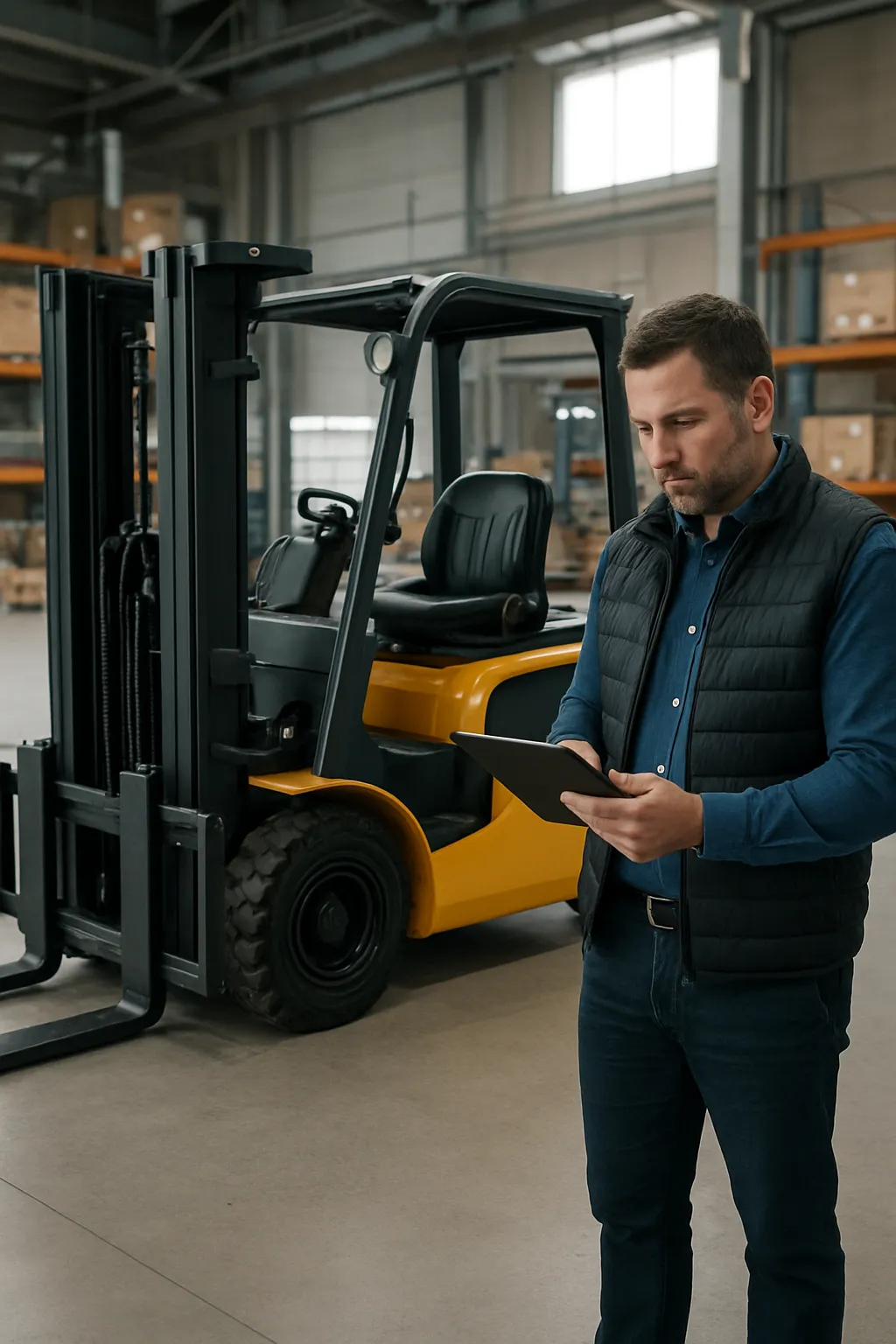
Forklift depreciation can be estimated by subtracting the expected salvage value from the original purchase price and dividing the result by the forklift's estimated useful life. However, its actual market value will also depend on operating hours, condition, maintenance history, power source, attachments, location, and current buyer demand.
Operating hours
Higher annual usage generally increases wear and can reduce resale value faster than age alone.
Maintenance history
Complete service records help demonstrate proper care and reduce uncertainty for potential buyers.
Physical condition
Fork wear, hydraulic leaks, tire condition, mast damage, and safety issues can all affect valuation.
Market demand
Regional inventory, equipment shortages, and demand for specific forklift types influence current selling prices.
What is forklift depreciation?
Depreciation represents the gradual decline in an asset's value over time due to age, wear, usage, and changing market conditions.
For forklifts, depreciation affects:
- Financial reporting
- Equipment replacement planning
- Lease negotiations
- Insurance valuations
- Resale pricing
- Fleet management decisions
Accounting depreciation follows established financial and tax schedules, while market depreciation reflects what buyers are currently willing to pay.
These two values are often different because accounting records do not always reflect the forklift's actual condition or current market demand.
How to calculate forklift depreciation
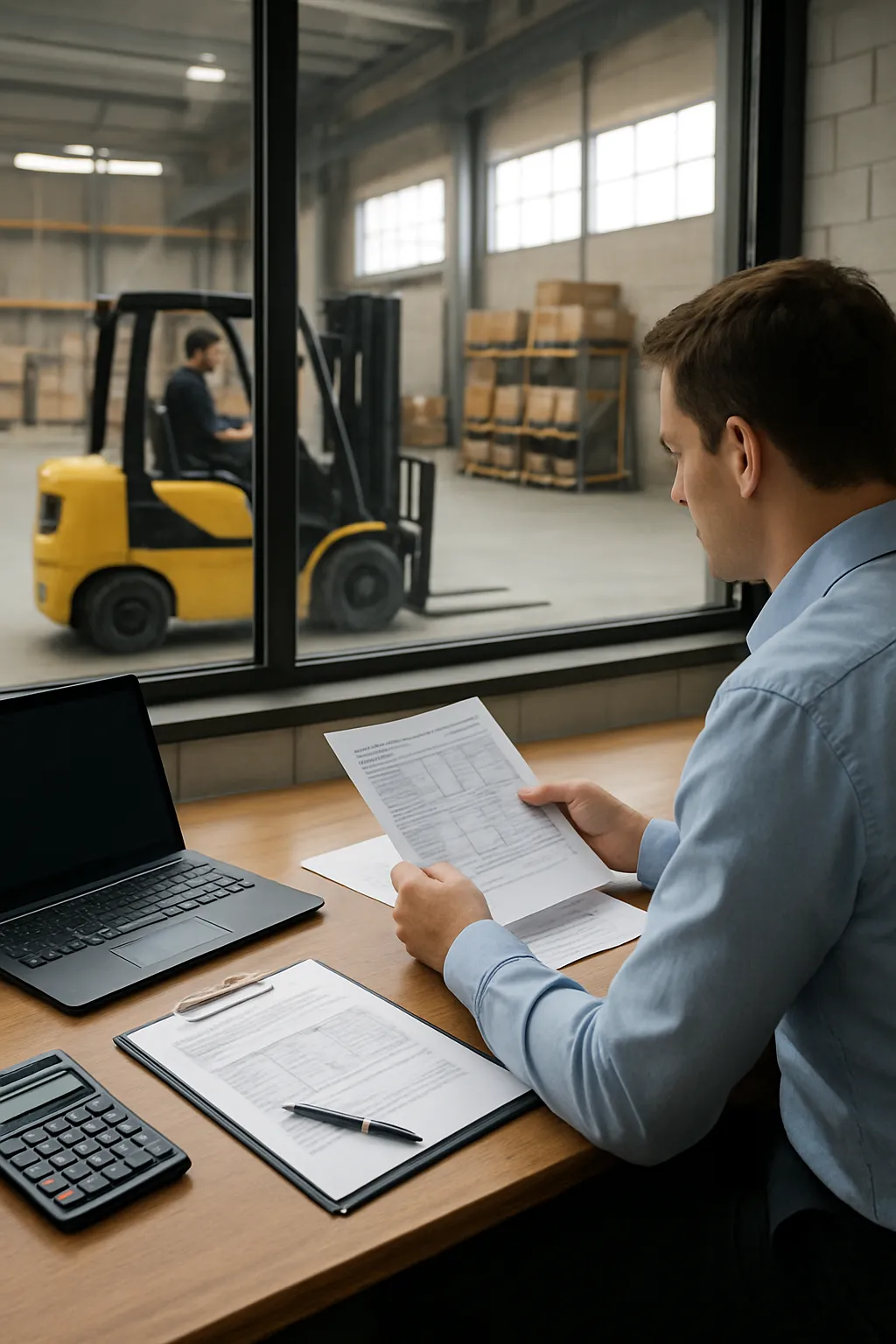
One common accounting method is straight-line depreciation. This method spreads the depreciable value of the forklift evenly across its estimated useful life.
Straight-line depreciation formula
Example calculation
Assume a forklift is purchased for $45,000, has an estimated salvage value of $9,000, and is expected to remain in service for eight years.
| Calculation item | Amount | Explanation |
|---|---|---|
| Original purchase price | $45,000 | The forklift's initial acquisition cost. |
| Estimated salvage value | $9,000 | The expected value at the end of its useful life. |
| Depreciable amount | $36,000 | Purchase price minus estimated salvage value. |
| Estimated useful life | 8 years | The period used for the accounting schedule. |
| Annual depreciation | $4,500 | $36,000 divided by eight years. |
Hours often matter more than age
Many buyers initially focus on the forklift's manufacturing year, but operating hours often provide a better indication of how heavily the equipment has been used.
A five-year-old forklift with low operating hours may command a higher resale price than a newer machine that has been operated continuously across multiple shifts.
Buyers commonly review
- Total operating hours
- Average annual usage
- Number of daily shifts
- Operating environment
- Idle time
Higher utilization generally accelerates wear on major components and can reduce the forklift's remaining operational life.
Engine type influences long-term value
A forklift's power source affects maintenance requirements, operational demand, and potential resale value.
Electric forklifts
Electric models may retain value because they typically offer:
- Lower maintenance requirements
- Fewer moving engine components
- Lower operating costs
- Strong demand in warehouse environments
Battery age, charging history, capacity, and overall condition can significantly influence resale pricing.
Propane forklifts
Propane equipment remains popular because of:
- Quick refueling
- Operational flexibility
- Indoor and outdoor use
- Wide availability across different industries
Engine condition and emissions performance become important factors during valuation.
Diesel forklifts
Diesel forklifts continue to perform well in heavy-duty outdoor applications. Their resale value often depends on:
- Engine hours
- Emissions compliance
- Maintenance records
- Overall operating condition
Choosing the right power source affects both the initial purchase cost and long-term asset value.
Maintenance history can increase resale value
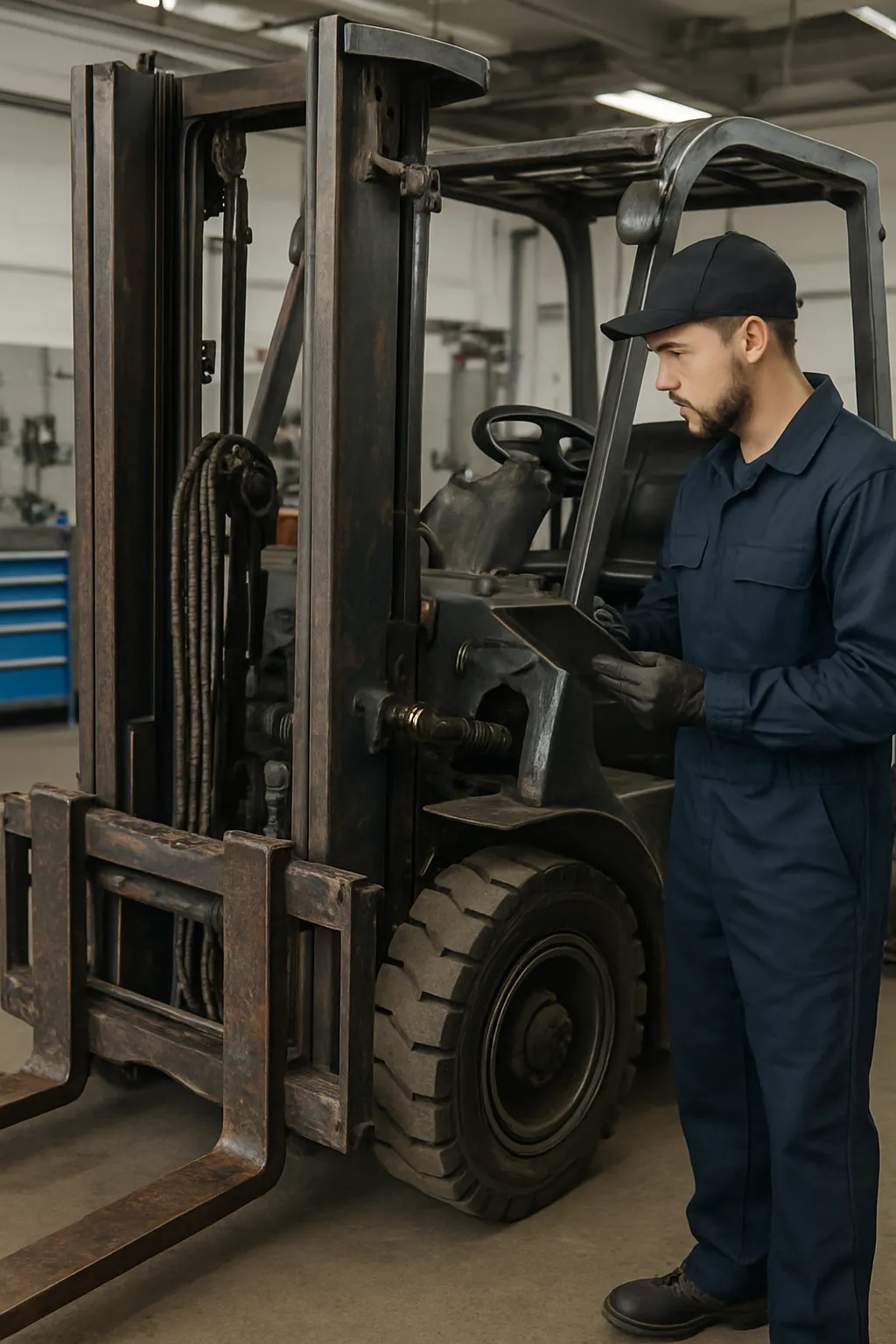
Service records provide buyers with confidence. Well-documented maintenance demonstrates that the equipment has been properly cared for throughout its operating life.
Important records include
- Preventive maintenance schedules
- Oil and filter changes
- Hydraulic servicing
- Brake inspections
- Tire replacement
- Battery maintenance
- Major repairs
A complete maintenance history can support a higher resale price while reducing buyer uncertainty about future repair requirements.
Physical condition matters
Visual appearance and mechanical condition remain important parts of any forklift evaluation.
Load components
- Fork wear
- Fork damage
- Carriage condition
Mast and hydraulics
- Mast condition
- Hydraulic leaks
- Hose and cylinder wear
General condition
- Tire wear
- Paint condition
- Operator compartment
Safety equipment
- Warning lights
- Safety equipment
- Warning labels
Normal cosmetic wear is expected, but excessive damage may indicate poor maintenance practices, harsh operating conditions, or unresolved mechanical problems.
Market demand affects depreciation
Even well-maintained forklifts experience changing values as market conditions evolve.
Demand may increase because of:
- Warehouse expansion
- Supply chain growth
- Equipment shortages
- Rising new equipment prices
Conversely, economic slowdowns or increased inventory availability can place downward pressure on used equipment values. Understanding current market conditions helps buyers and sellers negotiate more realistic pricing.
Using market benchmarks
One of the most effective ways to estimate depreciation is to compare the forklift with similar equipment currently available in the marketplace.
Businesses evaluating replacement costs should review the Pricing breakdown for new and used forklifts . Comparing current asking prices provides valuable context when estimating the market value of existing equipment.
Look for comparable models with similar specifications, operating hours, attachments, power sources, capacities, and overall condition. These comparisons help establish more realistic pricing expectations.
Attachments and location can influence value
Attachments can add value
Additional equipment may increase resale value when it is compatible with the forklift and properly maintained.
- Side shifters
- Fork positioners
- Clamps
- Rotators
- Extended forks
- Specialized attachments
Buyers will also consider whether the attachment matches their operational needs. Not every upgrade automatically results in a higher selling price.
Location influences pricing
Regional demand can affect used forklift values. Large industrial markets may experience stronger demand because of:
- Distribution centres
- Manufacturing facilities
- Construction activity
- Logistics operations
Monitoring inventory across major Canadian markets helps buyers identify competitive opportunities while assisting sellers in pricing their equipment appropriately.
How depreciation supports fleet replacement planning
Review equipment use
Record the forklift's age, operating hours, daily shifts, load requirements, and working environment.
Track ownership costs
Compare repair frequency, maintenance expenses, fuel or battery costs, and operator downtime.
Estimate resale value
Review comparable equipment, regional demand, service history, attachments, and physical condition.
Choose the replacement point
Consider replacing the forklift before maintenance costs and downtime outweigh its remaining operational value.
Beyond accounting depreciation
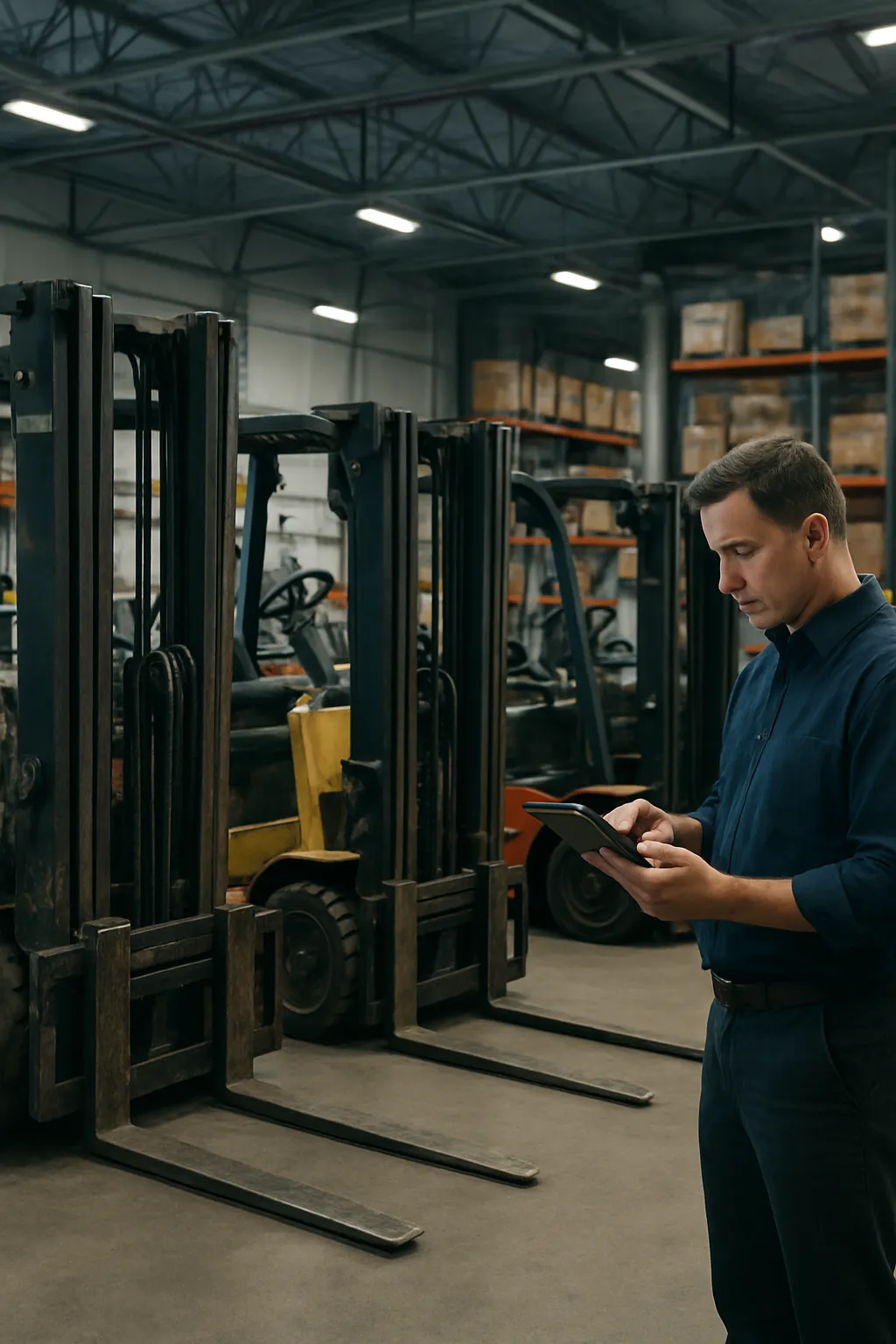
Accounting schedules provide standardized depreciation for financial reporting, but market value depends on real-world conditions.
Successful buyers and sellers evaluate:
- Machine condition
- Operating hours
- Maintenance history
- Market demand
- Equipment specifications
- Regional availability
Combining these factors provides a more accurate estimate of the forklift's true asset value than relying on an accounting schedule alone.
Make more informed forklift asset decisions
Calculating forklift depreciation involves more than applying a standard accounting formula. Real-world market value is influenced by operating hours, engine type, maintenance history, physical condition, regional demand, and overall equipment performance.
Businesses can use insights from Forklift Truck Canada to compare current pricing trends, equipment availability, and industry benchmarks. This information can support smarter purchasing, selling, and fleet replacement decisions while helping organizations maximize the return on their equipment investments.
By comparing market prices, reviewing available inventory, and maintaining accurate service records, organizations can develop a clearer understanding of forklift asset values throughout the equipment lifecycle.